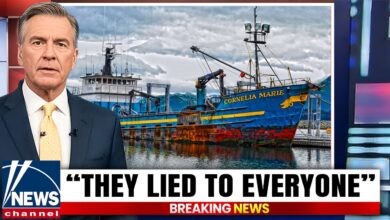
How America’s Toughest Show Became Its Fakest
How America’s Toughest Show Became Its Fakest

“Deadliest Catch: The Death of Reality in Reality TV”
He died doing what he loved — screaming at his son while a crab pot crushed his spine. Money was coming out of there. Welcome to Deadliest Catch: the only TV show where the protagonists die of natural causes in the most unnatural ways imaginable. A place where trauma becomes content and every episode feels like OSHA’s worst PowerPoint presentation.
Back in 2005, Deadliest Catch wasn’t just a show. It was grit, diesel, and grief packaged into one-hour cable bangers. It had weather that could kill you, crab pots that could crush you, and captains who probably shouldn’t be trusted with knives, let alone with a vessel. And we loved it for that. Three million people a week tuned in to watch Sig Hansen smoke through a blizzard, or Captain Phil Harris cough up a lung while bonding with his kids. It was raw. It was real. And it was weirdly moving.
The stakes felt biblical — men versus nature, fathers versus sons, and viewers versus the unsettling realization that we had become emotionally invested in seafood logistics.
The Golden Era of Grit
The year was 2005. Reality TV was still pretending it wasn’t staged, and the Discovery Channel was desperate to prove it could still educate people and make them cry. So they launched a new series documenting Alaskan crab fishermen braving the Bering Sea — with the simple premise: This job might kill you. Watch it anyway.

Audiences were hooked, not just because of the danger but because it felt real. These weren’t influencers doing yoga in Bali; these were men named Sig and Phil who looked like they drank motor oil for breakfast and went to therapy via fistfight. Dutch Harbor, Alaska — a frozen outpost that made Fargo look like Miami Vice — became the stage for Discovery’s most honest drama.
The early seasons were a masterclass in accidental brilliance. The cinematography was stunning. The blood wasn’t fake. The characters didn’t need writers. Captain Phil Harris smoked like he was on fire, the Hillstrand brothers ran their boat like a pirate ship, and Sig Hansen embodied the human form of a nicotine patch that yells back.
By Season 3, Deadliest Catch was a global phenomenon, airing in 170 countries with over 49 million unique viewers. It won Emmys, spawned fan conventions, merch lines, and even inspired people to believe they could handle a crab pot — until they learned what frostbite feels like. It was Discovery’s golden era: no sharks with lasers, no fake gold miners — just crabs, chaos, and charisma.
When the Catch Turned Rotten
Like all great American downfalls, it began with contracts, lawsuits, and fireworks.
In 2010, Discovery sued two of its stars — the Hillstrand brothers — for bailing on a spin-off project. Sig Hansen threatened to walk in solidarity. The dispute was quietly settled, but the damage was done. The “authentic” blue-collar heroes of America’s toughest show had become embroiled in network politics. The illusion of purity was gone.
Then came the literal explosions. In 2013, deckhand David “Beaver” Zilinsky lost his hand when a promotional firework — yes, part of their merchandising — exploded prematurely. He sued the Hillstrands and won $1.35 million. Suddenly, Deadliest Catch wasn’t about the dangers of the sea anymore; it was about the dangers of branding.
And then came tragedy. In 2010, Captain Phil Harris — the show’s heart and emotional anchor — died from a stroke. His farewell episode drew 8.5 million viewers, the show’s all-time high. But with his death, Deadliest Catch lost its soul. Phil’s chain-smoking, tough-love fatherhood gave the show emotional gravity. Without him, it drifted. New captains arrived. The drama turned scripted. The raw stoicism was replaced by greenhorns crying in the freezer and captains auditioning for Real Housewives: Alaska.
From Storms to Scandals
The cracks deepened. 2017 brought Sig Hansen’s arrest for spitting on an Uber driver. In 2018, his estranged daughter resurfaced a child abuse lawsuit from the ’90s. That same year, his brother Edgar pleaded guilty to sexually assaulting a 16-year-old girl.
And then came Josh Harris — Phil’s son and the franchise’s redemption arc. Fans rooted for him as he carried his father’s legacy. But in 2022, old court records emerged linking him to a deeply disturbing case from his teenage years. Discovery cut ties overnight. The internet erupted. The Deadliest Catch subreddit turned from a fishing forum into a true-crime archive.
What had once been a story of men versus nature had become a series of lawsuits, police reports, and scandal recaps. Even the sea couldn’t compete with the human chaos.
The Death of Authenticity
As the headlines piled up, the show began to fake what it once found naturally: danger. Cliffhangers became formulaic. Confrontations were reshot. Emotions were edited into arcs. It stopped being a documentary and started cosplaying as one.
By the 2020s, Deadliest Catch had turned into Discovery’s version of The Walking Dead — still technically alive but long past its natural death. Reddit threads titled “I miss the old Deadliest Catch” read like support groups for fans grieving the loss of sincerity. One user summed it up best: “It’s all drama now. Same beats, no soul.”
The spin-offs didn’t help. The Bait, Bloodline, Dungeon Cove — the “Marvel Cinematic Universe of Maritime Misery.” Each one more desperate than the last. The most suspenseful part of the franchise today isn’t whether the crew will survive the storm — it’s which captain’s mugshot will go viral next.
The Sea Was Never the Enemy
At its best, Deadliest Catch wasn’t just television. It was a eulogy for working-class America. A story of fathers and sons, storms and scars, labor and loss. It was about men who didn’t say “I love you” — they yelled it across a freezing deck. It meant something.
But as the seasons dragged on, the authenticity faded. The cast collapsed under its own mythology. The ocean — once the show’s deadliest character — was replaced by lawyers, lawsuits, and legally mandated disclaimers.
Maybe the sea was never the biggest threat. Maybe it was the cameras.
Let the Boats Rest
Can Deadliest Catch be saved? Maybe. But should it? Probably not.
Perhaps it’s time to let the boats sail into rerun syndication, to let the captains live on in YouTube compilations and Reddit lore. Let us remember Deadliest Catch not as the reality show it became, but as the documentary it almost was — an elegy for grit, danger, and the kind of honesty TV can’t fake anymore.
Because there’s no crying in the crab pot.
Unless it’s for ratings.